



COLUMBUS, Ohio — Last week, a group of Ohio lawmakers, including vocal War on Porn crusader Jena Powell, presented separate pieces of legislation they will introduce with an aim to, in their words, “shame” people who pay sex workers, or those “knowingly receiving financial proceeds for sex acts committed” by sex workers.
While these specific bills conform to the Kamala Harris-endorsed “Nordic Model” of targeting what she calls “pimps and johns” instead of actual sex workers, their apparent aim is to eradicate all commercial sex, including commercial consensual sex among adults.
They also would endanger consensual adult sex workers who would not be legally able to hire drivers or security.
According to the Columbus Dispatch, “in a bid to use shame to deter the purchase of sex, Ohio Attorney General Dave Yost and a group of lawmakers want to post the names and photos of convicted ‘johns’ and pimps in an online registry.”
Yost is asking the state of Ohio to use state taxes to provide him with $190,000 to maintain this database.
The Power of Shame
“Never underestimate the power of shame as a human motivator,” Yost said last Wednesday as he spoke to a group of legislators that included Jena Powell, an outspoken, openly religiously motivated Republican lawmaker for the 80th district, in the western part of Ohio, bordering with Indiana.
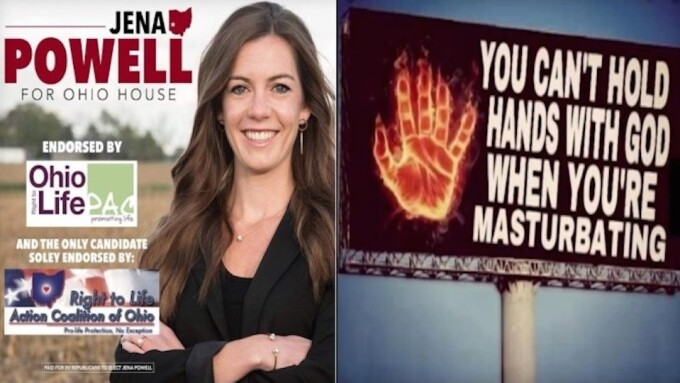
For an in-depth look at Powell’s astonishingly speedy rise to state and national attention at 25, fueled by support from religious right think-tanks and organizations connected to his brother, Ohio roadside billboard magnate Justin Powell, click here.
Powell was instrumental in spearheading the legislation that is about to turn Ohio into the 17th state to declare a supposed “health crisis” around pornography. This is part of a well-funded War on Porn being waged by a low-profile coalition of religious fanatics, for-profit propaganda outlets, “leadership summits” and more mainstream “conservative” politicians, often in alliance with supposedly progressive SWELs (Sex Worker Exclusionary Liberals) and SWERFs (Sex Worker Exclusionary Radical Feminists).
The Columbus Dispatch wrote last Wednesday that Ohio’s Attorney General Dave Yost told the crowd that “basic economics works under the premise of [sex work] supply-and-demand, and right now we have a demand problem in Ohio.”
“Our goal is to reduce the demand and in return rescue victims from this modern-day slavery,” said Yost, echoing the religiously motivated language equating all commercial sex, including among consenting adults, with human trafficking.
Republican Ohio senator Tim Schaffer, according to the Columbus Dispatch, said that “the bill will include a $190,000 two-year appropriation for Yost’s office to maintain a public, online registry of those convicted of buying and promoting the purchase of sex from prostitutes.”
Florida has recently enacted a similar database.
Republican representatives Rick Carfagna and Cindy Abrams joined Powell, who said she introduced HB180, her recent bill "to declare pornography a public health hazard,” in order to “address the market for risky sexual encounters spurred by lurid online images lacking any controls.”
One of the new bills proposed last week by Powell and her allies targets people “knowingly receiving financial proceeds for sex acts committed by” sex workers, which would open the door for roommates, friends, bodyguards, people who give rides or are paid by known sex workers with the results of their labor to be prosecuted.
The likely result of this bill would be to force sex workers into double lives, hiding their means of living from even their closest friends and relatives to protect them from liability.
Although the religiously motivated lawmakers claim that “a new offense of procuring money tied to prostitution" will help prosecute "those who promote or compel prostitution," wrote the Columbus Dispatch, it remains to be seen how law enforcement and District Attorney Yost’s office will choose to enforce the bill's vague wording if it passes.



