



U.K. Politician Named 'Cummings' Shadowbanned by Twitter's Anti-Porn Filter

U.K. Politician Named 'Cummings' Shadowbanned by Twitter's Anti-Porn Filter

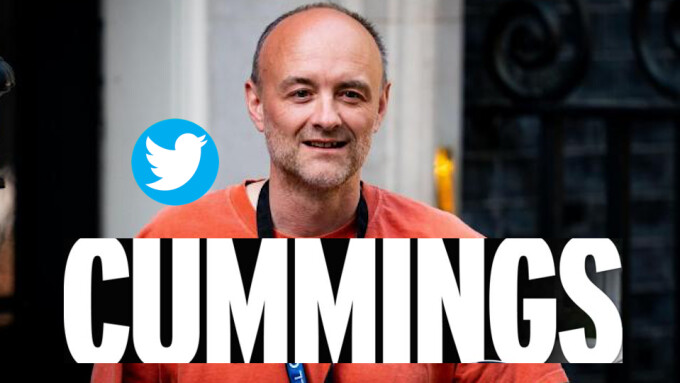
LONDON — The latest victim of Twitter’s unnecessarily secretive censorship policy regarding sexual content is not, for a change, an adult performer, but a publicly pilloried U.K. politician surnamed Cummings.

Dominic Cummings, Boris Johnson’s chief adviser, has been for days the subject of condemnations across the British political spectrum regarding his person-of-privilege perambulations around the realm while everyone else was under strict "stay-at-home" protocols.

This should have easily resulted in the chastised politician’s last name becoming a Twitter trending topic in the U.K. However, as The Guardian and other outlets pointed out, #Cummings was blocked by the platform as apparently too semen-evoking for a general audience.

“As a result of the filtering,” The Guardian wrote, “trending topics over the past five days have instead included a variety of misspellings of his name, including #cummnings, #dominiccummigs and #sackcummimgs, as well as his first name on its own.”

The liberal news site reports that the censorship-happy Twitter filter also affected suggested hashtags, “meaning users who tried to type #dominiccummings were instead presented with one of the misspelled variations to auto-complete, helping them trend instead.”

SEO experts have a name for this situation: the Scunthorpe Problem.

The Scunthorpe Problem was first noticed years ago, when residents of Scunthorpe, an English town, couldn’t enter or find their addresses because AOL and Google profanity filters objected to the “cunt” hidden within the town’s name.

People with relatively common, yet schoolyard-titters-inducing last names like "Butts" and "Weiner" have also encountered the Scunthorpe Problem.

“Although Twitter does not publish the contents of the word filter list,” The Guardian reported, “users can check whether a particular term is blocked from trending by searching for it. By default, the site blocks all photo and video results from search terms it believes may contain sensitive content, meaning a media search for ‘porn’ or ‘Cummings’ will, unless the search filters are turned off, return zero results.”

Twitter declined to comment, as expected given their secrecy about their algorithms and shadowbanning and censorship practices.


Related:  

Copyright © 2026 Adnet Media. All Rights Reserved. XBIZ is a trademark of Adnet Media.
Reproduction in whole or in part in any form or medium without express written permission is prohibited.

More News

Eli Thomas Launches 'VerifiedCollab' Verification Platform

Performer Eli Thomas has launched VerifiedCollab, a verification platform for creators and producers.

House Committee to Weigh Online Safety Bill With Federal AV Requirement

The U.S. House of Representatives Committee on Energy and Commerce will meet Thursday to consider and potentially amend the Kids Internet and Digital Safety (KIDS) Act, which includes provisions to make age verification by adult websites federal law.

SWR Data Publishes 'Creator Income' Report

Adult industry market research firm SWR Data has published a report on creator incomes.

Pineapple Support to Host 'Neurodivergent Performers' Support Group

Pineapple Support is hosting a free online support group for neurodivergent performers.

'Legal Impact' Webinar Unpacks North Carolina's New Consent Law

Industry attorney Corey D. Silverstein on Thursday held a webinar focused on North Carolina’s HB 805, a new law that has significantly altered performer consent requirements in the state.

FSC Launches Privacy-First Age Verification Solution for Members

The Free Speech Coalition (FSC) announced today that it has granted members exclusive access to the PrivateAV age verification solution.

Brazil: New AV Requirements Set to Take Effect March 17

President Luiz Inácio Lula da Silva this week gave final approval to new regulations requiring adult websites to age-verify users located in Brazil starting March 17.

FSC Recommends Platforms Integrate StopNCII.org Tool

In a blog post, Free Speech Coalition (FSC) has recommended that platforms integrate the StopNCII.org tool to prevent the sharing of non-consensual intimate imagery (NCII).

Utah 'Porn Tax' Bill With VPN Provisions Passes State Senate

The Utah state Senate has passed a bill that would impose a 2% tax on the revenues of adult websites doing business in that state, and make sites liable if Utah minors use VPNs to circumvent geolocation.

Show More

