



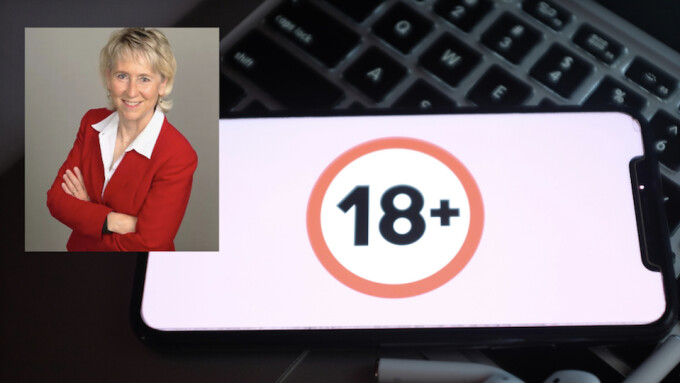
SALT LAKE CITY — Utah politicians continue their periodic attempts to pass hard-to-enforce state bills — allegedly to protect the citizenry from a made-up “public health crisis” around porn — with a new bill introduced to the legislature this week requiring “new electronic devices” to have pornography filters turned on by default.
The most recent example of Utah politicians' single-minded obsession with pornography comes courtesy of Representative Susan Pulsipher (R-South Jordan). Her House Bill 72 mandating porn filters — from which for-profit, faith-based software companies have been profiting for some time — would go into effect in 2022, the local CBS affiliate reported, adding that international manufacturers of phones and computers like Apple or Google may face civil liability if they don't comply.
“If a user does not want the filter, they would need to turn it off manually,” KUTV added.
One State's Obsessive 'War on Porn'
As XBIZ has been reporting, Utah legislators spend much time and the Western state’s limited resources introducing, debating and occasionally passing bills decrying “the scourge of pornography.”
Last year, the legislature passed a bill mandating that all adult content on the internet carry a specific warning label, under penalty of state fines.
This theatrical, almost-impossible-to-enforce bill was not signed by Governor Herbert, who let it die by exercising his “pocket veto” prerogative.
Herbert showed some practical restraint, in contrast with his 2016 signing of a resolution drafted by religious anti-porn group NCOSE (aka Morality in Media) declaring the existence of a dubious “public health crisis” around porn, and recommended that public health resources be spent training health care workers on how to combat it.
Representative Pulsipher's original draft of the bill she introduced this week had been criticized by other state lawmakers back in October.
As XBIZ reported, her proposal to require smartphones and computers to have pre-installed porn-blocking software, and to have it activated as the default option when sold to Utahns, was quashed during a committee hearing at the state's Business and Labor Interim Committee.
According to a report by Deseret News at the time, Pulsipher said “the goal of her effort was to create another wall of defense to help protect children from ‘the damaging impact of pornography’ and ‘empower parents and legal guardians to limit a minor’s exposure to such online harmful material.'"
Several members of the Utah Business and Labor Interim Committee, however, noted then that “it would be extremely difficult to identify which entity in the consumer electronics supply chain should be held liable for ensuring that software was activated."
According to public records, Representative Pulsipher's declared occupation is as a real estate appraiser. She appears to have no background in technology issues.
Main Image: Utah State Representative Susan Pulsipher (R-South Jordan). Photo: Utah House of Representatives.



