



Biden Orders 'National Security' Review of All Foreign Apps

Biden Orders 'National Security' Review of All Foreign Apps

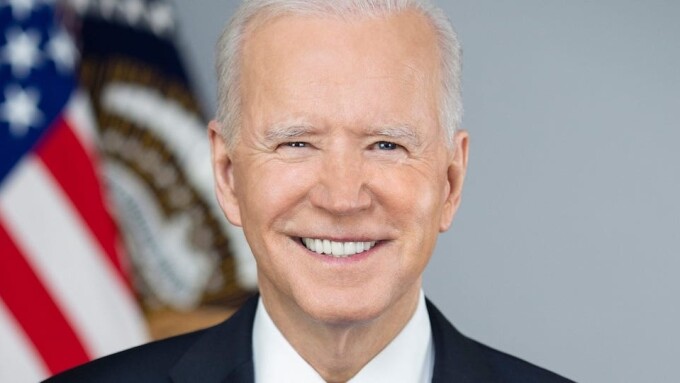
WASHINGTON — President Joe Biden yesterday issued an executive order mandating a vast review of “apps controlled by foreign adversaries” in order to assess national security and privacy issues.

The executive order substitutes an earlier order by Donald Trump that only specifically targeted China’s TikTok and WeChat, seeking a U.S. ban for them.

Biden revoked that narrow order, which had been issued reactively by the former president, and expanded the scope of the analysis to include all foreign-based companies, which include many in the adult space.

The new order, the Wall Street Journal reported, “doesn’t target any companies specifically, but creates the potential for an even broader crackdown on Chinese-owned apps than the Trump administration orders it replaces by mandating a review of all software applications with potential ties to countries such as China.”

According to the White House, Biden’s Commerce Department was “authorized to begin that review immediately.”

The Language of Biden's Executive Order

The language of Biden's executive order is broad and does not specify whether the review is specific to native apps or web (browser) apps, referring instead to “certain connected software applications."

The executive order's wording "directs the use of a criteria-based decision framework and rigorous, evidence-based analysis to address the risks posed by ICTS transactions involving software applications that are designed, developed, manufactured or supplied by persons that are owned or controlled by, or subject to the jurisdiction of a foreign adversary, including the People’s Republic of China, that may present an undue or unacceptable risk to the national security of the United States and the American people.”

It also "directs the Department of Commerce, in consultation with other U.S. departments and agencies, to make recommendations to protect against harm from the sale, transfer of, or access to sensitive personal data, including personally identifiable information and genetic information — to include large data repositories — to persons owned or controlled by, or subject to the jurisdiction or direction of, foreign adversaries."

"Additionally, the Department of Commerce will make recommendations for additional executive and legislative actions to further address the risk associated with foreign adversary-connected software applications.”


Related:  

Copyright © 2026 Adnet Media. All Rights Reserved. XBIZ is a trademark of Adnet Media.
Reproduction in whole or in part in any form or medium without express written permission is prohibited.

More News

Texas Court Orders Adult Site Domain Locked for AV Violations

A district court in Texas has issued a writ requiring domain registry Verisign to “lock” an adult website’s domain over noncompliance with the state’s age verification law.

Adult Web Hosting Service 'QloudHost' Launches

QloudHost, a new web hosting service for adult websites, has launched.

Peter Hooke Launches New Paysite

Peter Hooke has launched an official website through PAYSITE.

Pineapple Support Names Ny Ny Lew as Brand Ambassador

Pineapple Support has named Ny Ny Lew as its newest brand ambassador.

Federal AV Proposal Passes House, Faces Senate Opposition

The U.S. House of Representatives on Monday passed the Kids Internet and Digital Safety (KIDS) Act, which includes provisions to make age verification by adult websites federal law, but the bill still faces tough going in the Senate.

Devin Drills Launches New Paysite

Creator Devin Drills has launched an official website through PAYSITE.

AV Bulletin: Midyear Roundup

Since the U.S. Supreme Court’s decision in Free Speech Coalition v. Paxton, more state age verification laws have been enacted around the United States, as well as proposed at the federal level and in other countries. Meanwhile, lawsuits resulting from AV laws have begun to play out in the courts. This roundup provides an update on the latest news and developments on the age verification front as it impacts the adult industry.

Judge Dismisses Last NCOSE-Backed Suit Over Kansas AV Law

A federal judge on Monday dismissed a lawsuit alleging that adult site SuperPorn violated Kansas’ age verification law, citing lack of jurisdiction after similarly dismissing two related cases earlier this year.

ASACP Updates 'Restricted to Adults' Labeling Resource Page

The Association of Sites Advocating Child Protection (ASACP) has updated its Restricted to Adults (RTA) labeling resource page.

Federal AV Proposal Scores Minor Win in House but Remains in Doubt

A newly announced bipartisan agreement in the U.S. House of Representatives Committee on Energy and Commerce may soon bring a proposed federal age verification law before the full House, but the measure continues to face an uphill battle.

Show More

