



11th Circuit Rebukes Bulk of DeSantis' Florida Social Media Law

11th Circuit Rebukes Bulk of DeSantis' Florida Social Media Law

ATLANTA — The 11th Circuit Court of Appeals issued a ruling today blocking the major provisions of Gov. Ron DeSantis’ controversial Florida’s social media law, which would have held social media platforms liable for moderation policies in the name of political, but not sexual, "free speech."

The court decided that it is “unconstitutional for Florida to bar social media companies from banning politicians, in a major victory for tech companies currently fighting another appeals court ruling that allowed a similar law in Texas to take effect,” the Washington Post reported.

The 11th Circuit’s opinion unequivocally established that platform moderation decisions are protected by the First Amendment.

The 67-page opinion also “harshly criticized arguments that social media platforms should be considered ‘common carriers’ subject to government regulation.”

The judges, however, also ruled that “some provisions could stand, including that people banned from the platforms should be able to access their data for 60 days and disclosure provisions, such as clear content standards,” the Post reported.

“We conclude that social media platforms’ content-moderation activities — permitting, removing, prioritizing and deprioritizing users and posts — constitute ‘speech’ within the meaning of the First Amendment,” the judges noted.

The 11th Circuit’s decision contrasts with the recent decision by the 5th Circuit upholding a similar Texas law. Both laws and the disparate decisions by the appeals courts will now be considered by the Supreme Court.

As XBIZ reported, the unusual 5th Circuit decision was communicated earlier this month without any explanation as to the court’s reasoning and with two of the judges remaining anonymous.

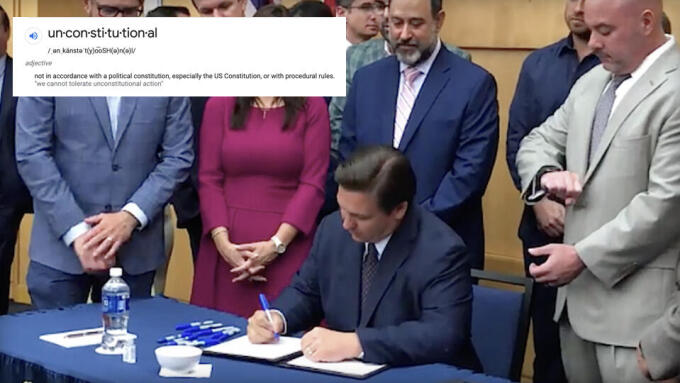
Main Image: Florida Governor Ron DeSantis (R) signing the so-called "Free Speech" law on May 24, 2021


Copyright © 2026 Adnet Media. All Rights Reserved. XBIZ is a trademark of Adnet Media.
Reproduction in whole or in part in any form or medium without express written permission is prohibited.

More News

2026 XBIZ LA Conference Schedule Announced

XBIZ is pleased to announce the release of the full show schedule for the XBIZ 2026 conference, set to take place Jan. 12-15 at the Kimpton Everly Hotel in Hollywood.

Needemand Joins ASACP as Corporate Sponsor

French startup company Needemand has signed on as the latest corporate sponsor for Association of Sites Advocating Child Protection (ASACP).

Utah State Legislator Proposes New 'Porn Tax'

A Utah state senator introduced a bill on Monday that would impose a 7% tax on the gross receipts of adult websites doing business in that state, plus require adult sites to pay an annual $500 fee.

Carlotta Champagne is LoyalFans' 'Featured Creator' for January

LoyalFans has named Carlotta Champagne as its Featured Creator for January.

Pineapple Support Relaunches Site

Pineapple Support has updated and relaunched its website.

Arcom-Targeted Sites Implement Age Verification in France

Five high-traffic adult websites based outside of France have implemented age verification as required under the nation’s Security and Regulation of the Digital Space (SREN) law, after receiving warnings from French media regulator Arcom.

Goddess Lilith Launches 'Adultpreneurs' Networking Site

Goddess Lilith has launched Adultpreneurs, a new community and networking site.

Adult Shoot Location Marketplace 'FckSpace' Launches

FckSpace, a new platform aimed at simplifying location sourcing for adult productions, is now live

Florida Attorney General Dismisses AV Suit Against Segpay

The Florida attorney general’s office on Monday agreed to dismiss claims against payment processor Segpay in a lawsuit over alleged noncompliance with the state’s age verification law.

FTC Weighs Reboot of 'Click to Cancel' Rulemaking Process

The Federal Trade Commission has invited public comments on a petition to renew trade regulation rulemaking concerning negative option plans, after a federal court previously vacated a “click-to-cancel” rule aimed at making it easier for consumers to cancel online subscriptions.

Show More

