



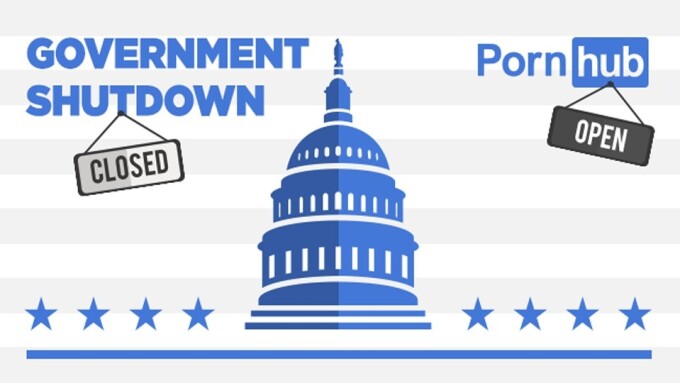
Pornhub Sees Rise in Traffic Amid Government Shutdown

Pornhub Sees Rise in Traffic Amid Government Shutdown

BURBANK, Calif. — As the U.S. government shutdown continues, Pornhub researchers took a look to see if worker downtime has had any effect on porn viewership.

The standoff over the partial governnment shutdown has been running since Dec. 22.

Pornhub’s researchers noted that there was not only an increase in visits to the site, but also a distinct shift in the hours during which people are watching porn. 

When compared to traffic levels prior to the shut-down, weekday visits across the U.S. were up 5.94 percent Jan. 7-11.

Pornhub’s peak traffic period across the U.S. is typically from 10 p.m. to midnight.

After the shutdown began, late-night traffic increased by up to 14 percent above average, while early morning traffic from 9 a.m. to 10 a.m. had the smallest change.

“Those fluctuations are similar to other events when people tend to stay up later and sleep in when they don’t have to go to work in the morning,” researchers said. “Afternoon traffic increased by as much a 7 percent above average at 1 p.m., when people would typically be at work.

“Average visit time during the week increased by 33 seconds (from 10 minutes 37 seconds to 11 minutes 10 seconds), further indicating that some people have a bit more time on their hands. Visits from women were also up by 4.2 percent above average.

Pornhub researchers also noted the following categories showed the biggest increase in afternoon traffic during the measured time:

  • Outdoor: +71 percent
  • Threesome: +66 percent
  • Old/young: +60 percent
  • Small Tits: +57 percent
  • Squirt:+54 percent
  • Solo female: +53 percent
  • Cuckold: +49 percent
  • Trans: +37 percent
Related:  

Copyright © 2026 Adnet Media. All Rights Reserved. XBIZ is a trademark of Adnet Media.
Reproduction in whole or in part in any form or medium without express written permission is prohibited.

More News

Utah Governor Signs 'Porn Tax' and VPN Rule Into Law

Governor Spencer Cox on Friday signed into law a bill to tax adult websites and make them liable if minors circumvent geolocation.

BranditScan Launches 'White Glove' Subscription Tier

BranditScan has launched its new White Glove subscription tier for creators.

German Court: Regulator Can't Block Creator's IG Account, Only Posts

A German court has ruled that while a regional media regulatory agency may block specific Instagram posts that include material deemed harmful to minors, it cannot ban an entire Instagram account due to such a post.

Brazil Lays Out Preliminary Guidelines for New AV Requirements

President Luiz Inácio Lula da Silva on Wednesday signed a decree establishing guidelines for new regulations requiring adult websites to age-verify users located in Brazil.

Senate Committee Debates Section 230 Reform

The U.S. Senate Committee on Commerce, Science, and Transportation held a hearing Wednesday on potential changes to Section 230 of the Communications Decency Act, which protects interactive computer services — including adult platforms — from liability for user-generated content.

Pearl Industry Network Offers Free Creator Memberships

Industry trade group Pearl Industry Network (PiN) has launched its free creator membership initiative.

Sam Bird Acquires Fanblast

Sam Bird, former co-director of global talent agency Surge, has acquired creator monetization tool Fanblast and named himself CEO.

'SheHerGirls' Launches Through Paysite.com

The braintrust behind PoleVixens has officially launched a new membership site, SheHerGirls, also through Paysite.com.

FTC Invites Public Comment on 'Click to Cancel' Rulemaking

The Federal Trade Commission (FTC) announced this week that it is seeking public comment on whether it should amend its Negative Option Rule to better address deceptive or unfair practices.

Aylo Rebuts Indiana AV Suit Claims Over VPN Access

Aylo this week asked a Marion Superior Court judge to dismiss Indiana’s lawsuit alleging that the company violated the state’s age verification law by failing to prevent access by users who employ VPNs and similar means to avoid geolocation.

Show More



